
Legislative activity in the Ohio General Assembly is picking up again ahead of the primary election in the spring. Within the last year, both the Ohio House and Ohio Senate adopted new processes for the submission of public testimony on legislation being heard across the committees in each chamber. We thought it may be helpful to share the process more widely.
Who decides what legislation should be considered?
First, a quick refresher on the legislative process and the importance of public testimony. Legislators in both chambers can introduce legislation. They work with the Ohio Legislative Service Commission, or LSC, to draft legislation on issues that they want to address. These often arise from constituent concerns, issue area expertise that members bring to the General Assembly, updates to existing policies as the world around us changes, a need to address nascent policy issues and/or a combination of any of these. When a member of the Ohio House introduces, or sponsors, a piece of legislation it goes through a process to be referred to the relevant committee (the same goes for the Ohio Senate).
Sponsor testimony
Once referred, the first hearing on the bill will be sponsor testimony, where, as the name suggests, the sponsor of the bill speaks to what the bill addresses and why the committee should move it forward through the process. Next comes proponent, opponent and interested party testimonies (not necessarily in that order or on separate days) where individual or group who supports, opposes or has relevant information and experience to share about the bill and/or cares about the outcome of the bill can (and SHOULD!) share their perspectives.
Committee process
The committee process is where the members of the General Assembly and anyone engaged on the bill can learn about it and work through any issues. This process happens in the public, and it’s important for anyone with expertise related to the bill to offer insight into the impact that a bill could have.
There is no defined timeline for this process to happen, aside from the fact that bills can only move through the two-year cycle of the current General Assembly. If they don’t make it all the way through to passage in those two years, then the process must be restarted with a new bill in the next General Assembly. Sometimes a bill moves quickly, sometimes it’s the opposite and of course there’s always the middling pace some bills move at and then speed up or slow down depending on surrounding circumstances (i.e., usually politics).
In a nutshell, for a bill to become law, it moves through the committee process in its originating chamber and must be voted on the floor of the respective chamber before it moves to the other chamber to repeat the process. If all that happens, the Governor must sign it into law. Most bills that are drafted by LSC and even most that are introduced don’t become law.
Testimony submission
Now back to the testimony submission process since this is a key element of engaging on legislative activity. In the past, the chairs of the respective committees collected testimony on the bills, typically via email. As you can imagine, on bills dealing with a lot of issues (like the state budget) or a bill that is eliciting a lot of feedback, this process could quickly become overwhelming for the legislative aide monitoring the inbox and ensuring a smooth process on the day of the hearing (although nearly every aide tasked with this job handled it expertly!). This also meant navigating different contact information for each committee and ensuring it always landed in the correct inbox (easier said than done when the budget issues you’re following are handled in multiple committees).
Last year, the Ohio Senate moved to online submission of public testimony, and the Ohio House joined them this year. Community Solutions commends both chambers for moving to this online process that makes testimony submission more accessible.
Timelines and rules for online testimony submission
In the past, it was necessary to be on the committee email listserv to receive notice of the committee hearing, the email address where testimony should be sent, and the required witness form. The online submission system accepts both testimony and witness information. We still recommend joining the listserv for each of the committees that you are interested in following, since it is typically the quickest way to know when the next hearings will take place. Testimony is still due 24 hours ahead of the start time of the committee where you’re planning to offer testimony, as it was with the email process.
The Senate and House are accepting online testimony submissions on the respective committee webpages. When there is an upcoming committee meeting (or meetings) on the meeting schedule, choose the date you’re planning to testify and select “Upload Testimony." Testimony should be submitted as a PDF and if there are any supplemental materials you wish to share with the committee, they should just be included in the same document at the end of your testimony.
As an example, here’s what the committee meeting landing page looks like:
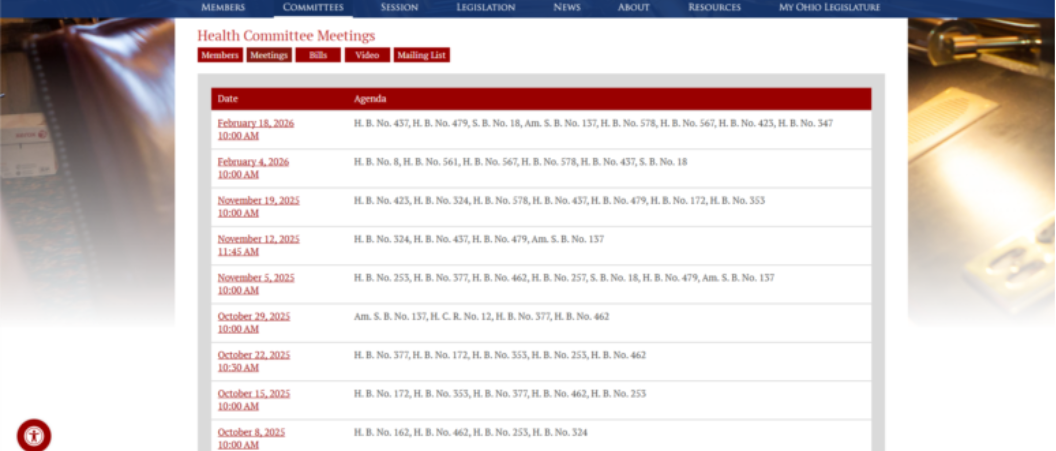
Click on the upcoming meeting DATE (in red), which will take you here:
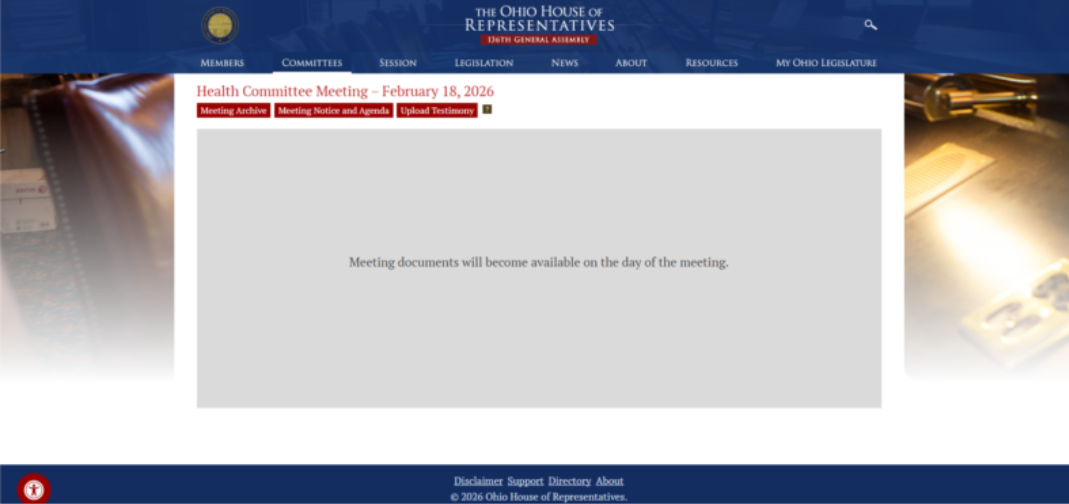
Click the button to UPLOAD TESTIMONY, which will take you to this page:
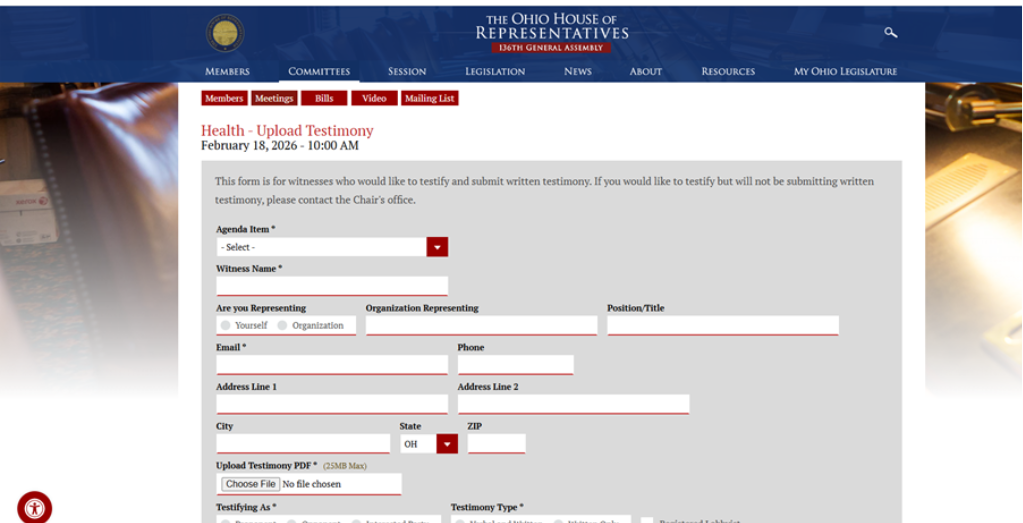
This process looks similar on the Ohio Senate committee’s pages.
Online testimony submission make engaging in the policy process easier
It is common to receive less than a week’s notice of an upcoming committee hearing. It’s important to read every email notice for announcements of upcoming committees and any changes to the schedule.
It may feel intimidating to engage in this process, but it is a valuable opportunity to offer insight into the impact of policy change. Policymakers rely on Ohioans across sectors to offer this insight. To further engage in legislation, it’s a good idea to connect with the sponsors of bills and the committee chair and members where bills are being heard.