Tomorrow, the U.S. Census Bureau will release income, poverty, and health insurance statistics from the Current Population Survey (CPS) Annual Social and Economic Supplement. What will be missing from the release is the 2025 American Community Survey (ACS) 1-year estimates.
At Community Solutions, we rely on ACS data to assess change, identify trends, and advocate for improved health, social, and economic conditions for Ohioans. While we typically use ACS 5-year estimates, most often released in December, we use the 1-year estimates to report a first look into how our communities are faring, as we did in 2025, 2024, 2023, 2022, 2021, and so on, going back pre-pandemic.
Data is more meaningful, more useful, and more informative the more granular it is.
The release of the 2025 ACS 1-year estimates has been postponed indefinitely as the U.S. Census Bureau determines how to comply with the Department of Commerce’s Department Administrative Order (DAO) 216-26 “Disclosure Avoidance for Statistical Products”.
Privacy vs. accuracy
Released on June 4, 2026, DAO 216-26 deals with a tension present in all statistics – providing meaningful data while also maintaining participants’ privacy. Data is more meaningful, more useful, and more informative the more granular it is. It is also harder to protect confidentiality if the data is too specific.
DAO 216-26 defines disclosure avoidance as “the efforts made to reduce the risk of disclosing confidential or otherwise protected information about individuals, businesses, or other organizations represented in statistics.” It goes on to identify three disclosure avoidance techniques:
- Noise infusion involves modifying a dataset by adding random values, or noise, to certain entries.
- Suppression involves expressly redacting certain values.
- Coarsening involves reducing the level of detail or specificity of published statistics, such as through rounding, aggregating (grouping), and/or the use of ranges.
In recent years, the U.S. Census Bureau has used “differentially private noise infusion” to strategically add or subtract data in order to maintain privacy in datasets. DAO 216-26 prohibits the use of noise infusion in all statistical products produced by the Census Bureau and the Bureau of Economic Analysis.
DAO 216-26 stipulates that coarsening will be the preferred disclosure avoidance method in these statistical products. Suppression is also permitted where coarsening is not possible.
The impact
The specific ramifications of the prohibition on noise infusion are unclear. A blog post from the Director of the Census Bureau notes, “Coarsening and suppression can reduce the amount and detail of data published, especially for small geographic areas or population groups.”
As is detailed in the blog from the Director of the Census Bureau, here is a list of which Census Bureau products will be impacted and how:
- 2030 Census. Decennial census data are the hardest to protect due to the data’s scale and detail. This new order has shifted the research agenda, but The Census Bureau’s key objectives remain the same: better assessment and communication of disclosure risks and better understanding of data users’ needs. The Census Bureau plans to release a demonstration data product in mid-2027 for public feedback that will inform decisions for census testing and ultimately the 2030 Census.
- ACS. The Census Bureau is researching new disclosure avoidance methods. Transitioning to methods compliant with the new order will occur gradually, with a full transition by 2029.
- Demographic surveys. Many of the Census Bureau’s demographic surveys use noise infusion methods. The Census Bureau will perform disclosure risk assessments for these products and research and identify new methods that are compliant with the order.
- Economic indicators. Most of the Census Bureau’s economic indicators are protected by suppression and won’t be affected. The Quarterly Financial Report is affected and will switch back to suppression.
- County Business Patterns. These data have historically used noise infusion, and the Census Bureau is exploring alternatives.
- Longitudinal Employer-Household Dynamics (LEHD). These products use state unemployment insurance data as inputs. Products produced with noise infusion required by states in the Census Bureau’s data-sharing agreements will continue until these agreements are updated.
What is clear is that some data products will be less specific. The impact on minority communities will be greatest, especially as these datasets are used to allocate funding and set policy. In a separate, but related, proposed rule for the Decennial Census released on September 10, 2026, disclosure avoidance is used to justify, in part, removing questions concerning race, ethnicity, and sexual orientation. This shift in the Department of Commerce points to less detailed data being available, but data that proponents would argue is more accurate because what will be available will not be altered by noise infusion.
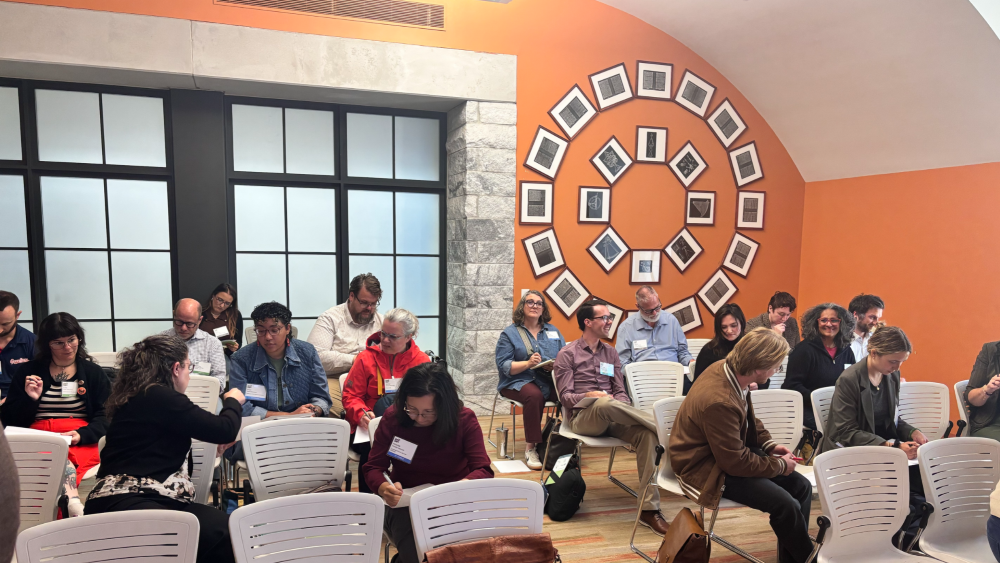
If you’re near Cuyahoga County, attend Data Days CLE on October 15!
An opportunity for local data collection
For comparisons at a large scale, there is no replacement for consistent national datasets. However, for those of us working to affect change in our local communities, there has never been a greater need for local data collection. Now is the time for funders, organizers, researchers, and citizens to consider how to mitigate losses in federal data collection by amplifying local capacity. Better data leads to better decisions and the ability to measure change.
If you’re near Cuyahoga County, attend Data Days CLE on October 15. Data Days Cleveland creates space for Northeast Ohio civic data and tech enthusiasts to share information, learn, and build community. Find more information and register here.