

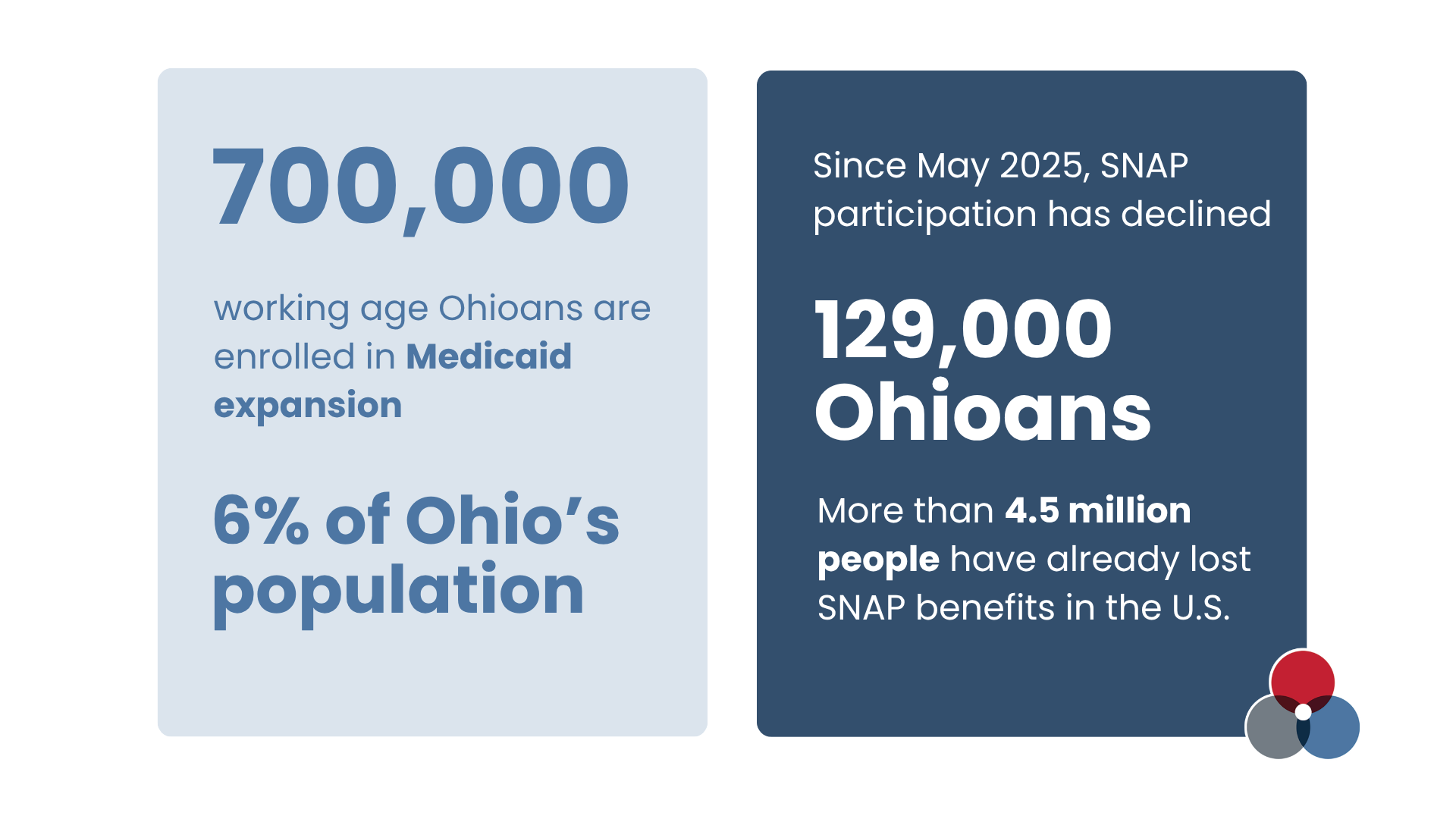
After months of extensive writing on SNAP and Medicaid, we have a simplified resource to help explain the coming changes.
What's changing in SNAP and Medicaid in 2026?
As a new federal law is implemented, changes to the Supplemental Nutrition Assistance Program (SNAP) mean new requirements impacting beneficiaries, and increased costs to states. Additionally, new federal legislation will soon require thousands of Ohioans enrolled through Medicaid expansion to meet monthly work and community engagement requirements to maintain coverage.
Medicaid and SNAP FAQs
What is Medicaid Expansion?
Medicaid Expansion is the group of adults who are eligible for Medicaid under the Affordable Care Act. Individuals with low income who traditionally do not meet the qualifications for traditional Medicaid, may qualify for coverage through Medicaid expansion.
Who will be affected by the work requirements?
More than 700,000 Ohioans. Specifically, working adults who are aged 19-64 and are enrolled in Medicaid expansion.
What does “80 hours a month” mean?
To keep your Medicaid coverage individuals who are enrolled in Medicaid expansion must complete and document 80 hours of qualifying activities every month unless you qualify for an exemption.
What is a qualifying activity?
Work, being enrolled in school, completing job training or community service activities. Individuals may combine multiple activies to reach the required 80 hours per month.
What is a medical frailty exemption?
Individuals with serious health conditions(physical, mental or developmental) that limit their ability to participate in the required qualifying activities, may qualify for an exemption from the work requirements.
Is homelessness an exemption?
Under the IFR, homelessness alone does not qualify for an exemption from the Medicaid work requirements. However, individuals experiencing homelessness may qualify for an exemption depending on their circumstance/s (e.g. severe health condition).
Why are there both a federal and state processes?
The Medicaid work requirement was created through federal legislation, but states are responsible for implementing and administering their Medicaid programs. The federal government establishes the requirements, states have to determine how to apply the requirements.
What does IFR mean?
Interim Final Rule (IFR), is guidance releasedby the Centers for Medicare and Medicaid Services (CMS) that explain how statesare to implement the new Medicaid work requirements.