Nonprofit organizations are foundational in helping communities navigate change and are often among the first organizations to identify emerging challenges and respond to crises. Today, many nonprofits find themselves responding to another period of rapid change—one characterized by policy uncertainty, shifting funding landscapes, and increasing demand for support.
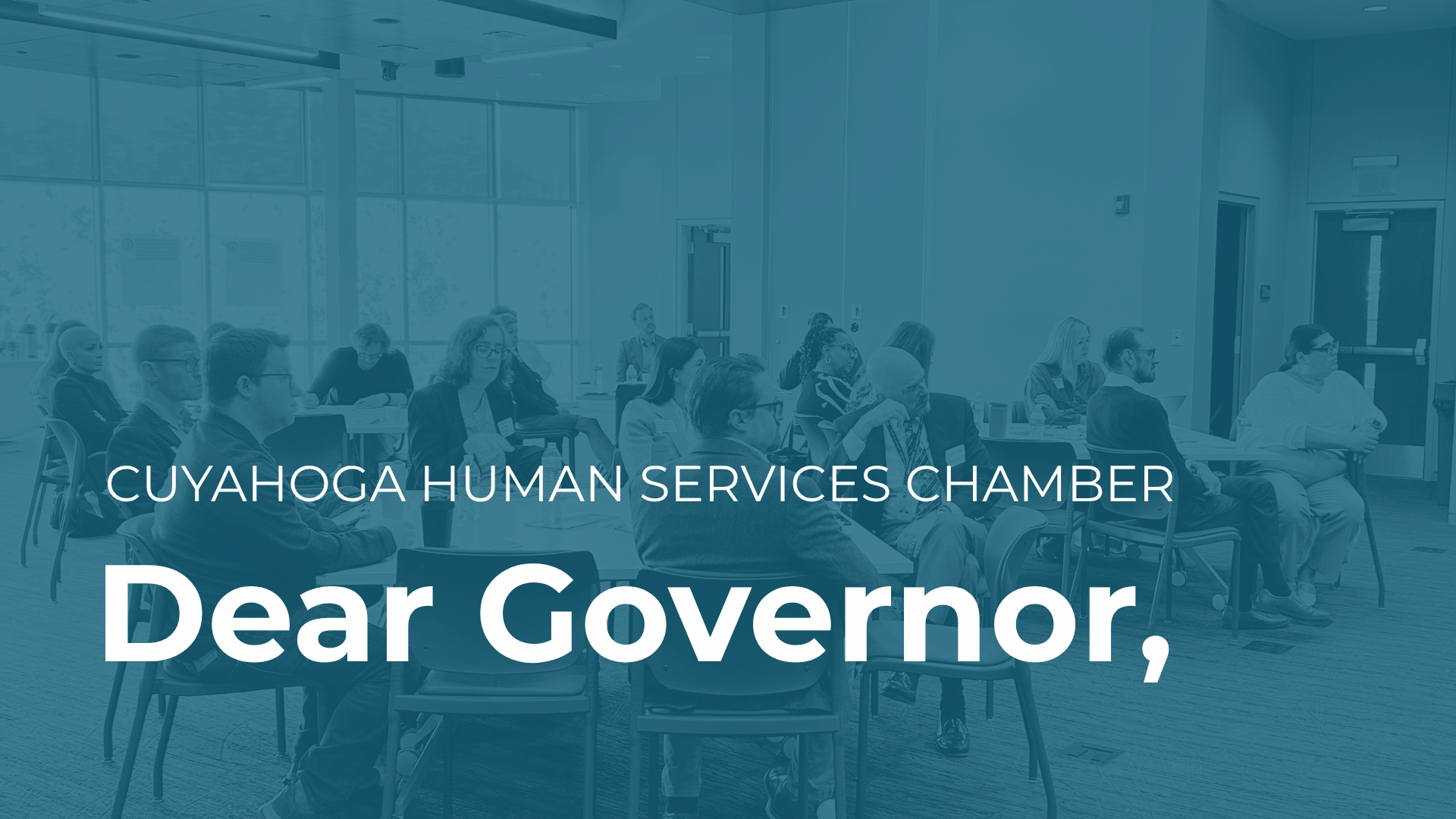
Recent survey results from May 2026 from members of the Cuyahoga County Human Services Chamber offer a snapshot of how organizations are navigating this moment. One finding stands out: 42 percent of responding organizations reported introducing new services or programs, while the same percentage reported reducing services.
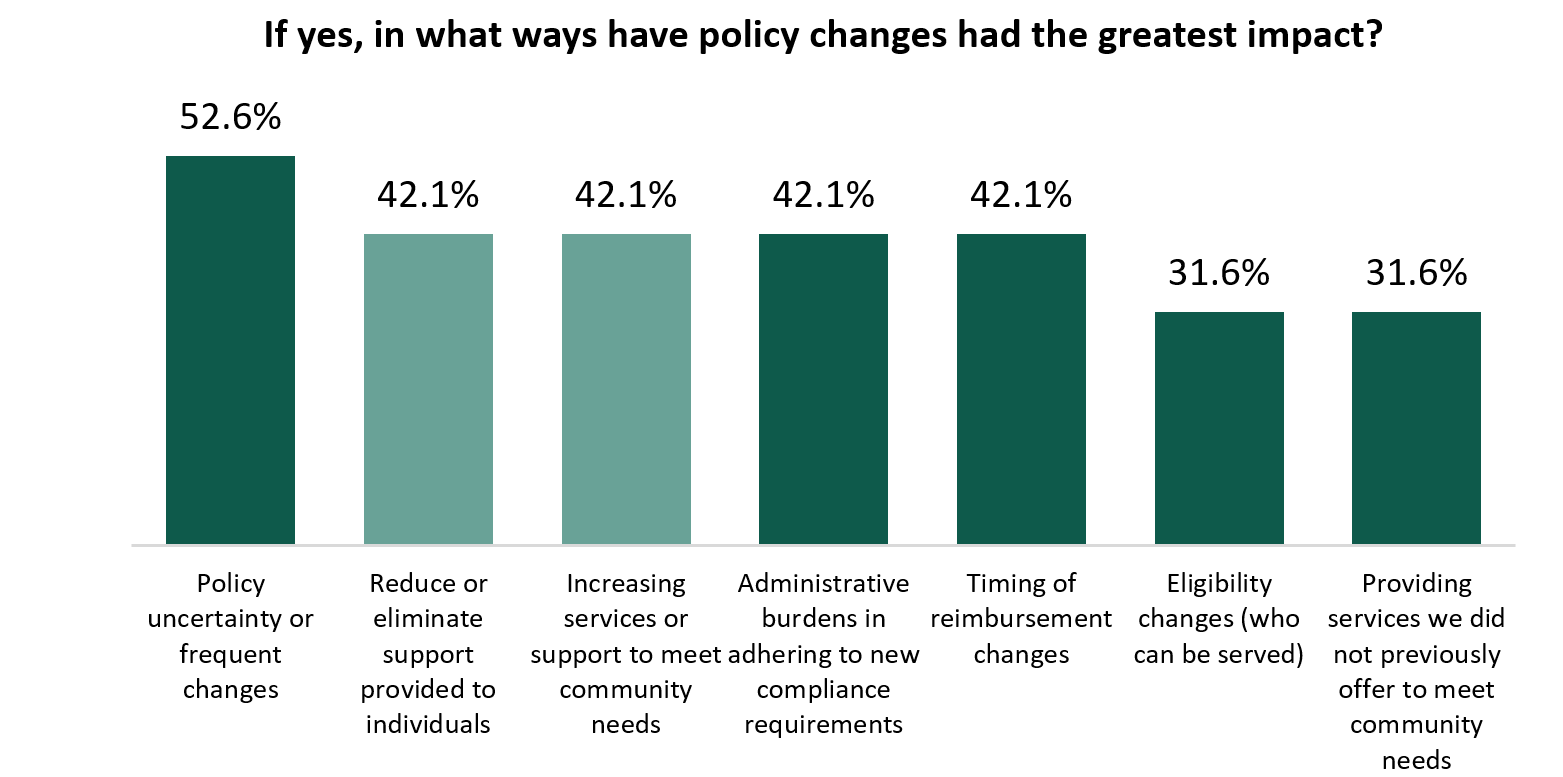
At first glance, those findings may seem contradictory. But upon further examination, it illustrates the difficult balancing act many nonprofits face. As community needs evolve and the federal policy landscape continues to change, organizations are adapting in real time, expanding in some areas while scaling back in others.
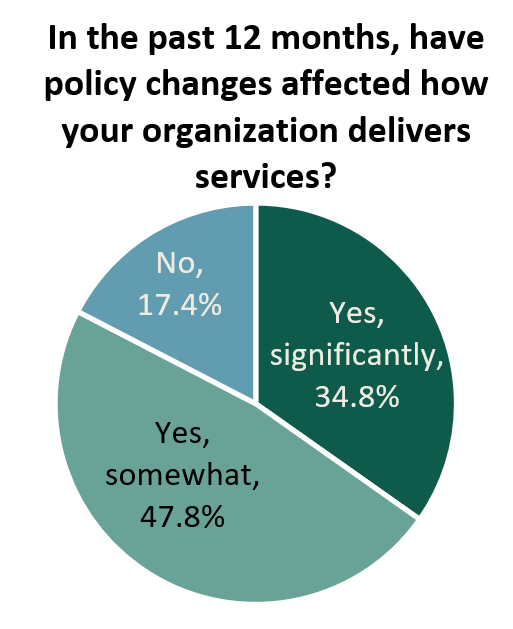
80 percent of nonprofits state that recent policy changes have affected how their organizations deliver services
These decisions are shaped by many external factors. More than 80 percent of respondents reported that recent policy changes have affected how their organizations deliver services. Respondents cited increased administrative requirements, changing eligibility rules, reimbursement challenges, and uncertainty about future funding as factors influencing how they do their work.
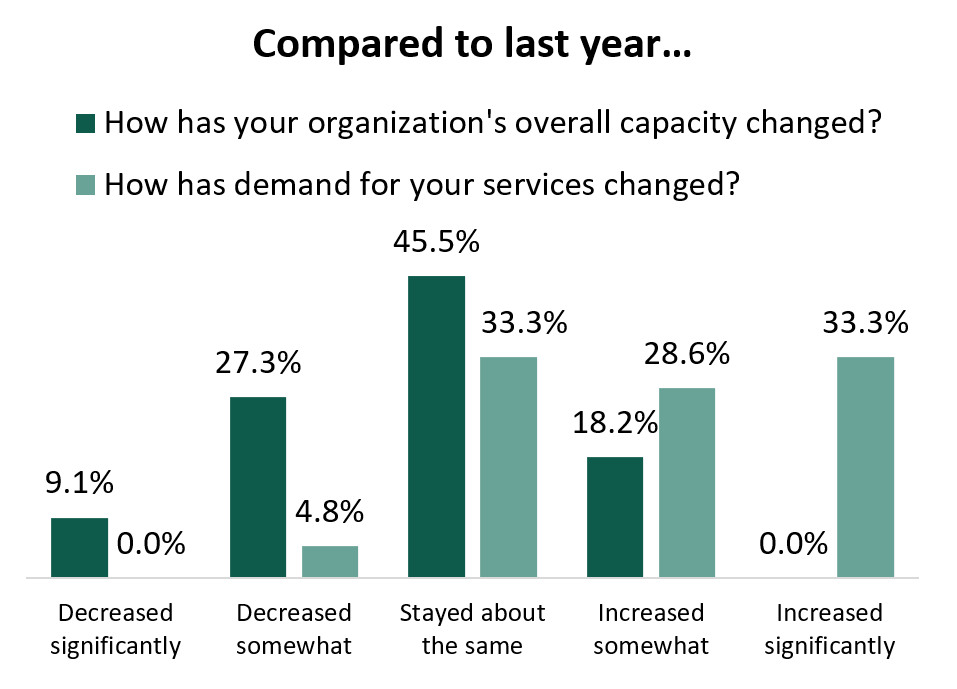
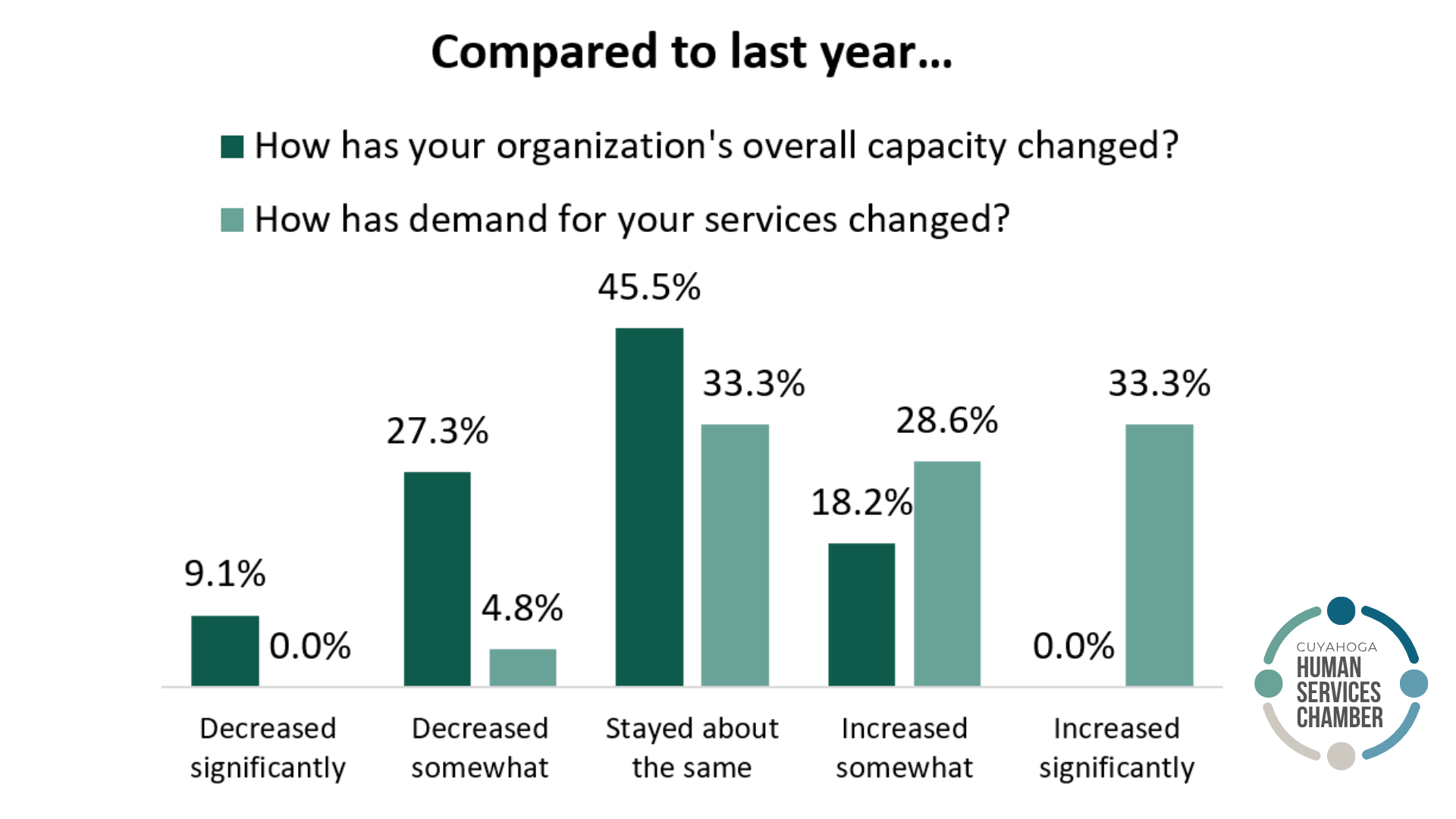
At the same time, demand for services continues to rise. More than 60 percent of organizations reported increased demand, while over 80 percent indicated stagnant or decreased capacity. As a result, organizations are responding to growing community needs without the resources and funding to keep pace. The people served by human services nonprofits are not going anywhere, and their needs will not disappear if funding is reduced or becomes less predictable. If organizations scale back services, the effects can be felt throughout the broader community.
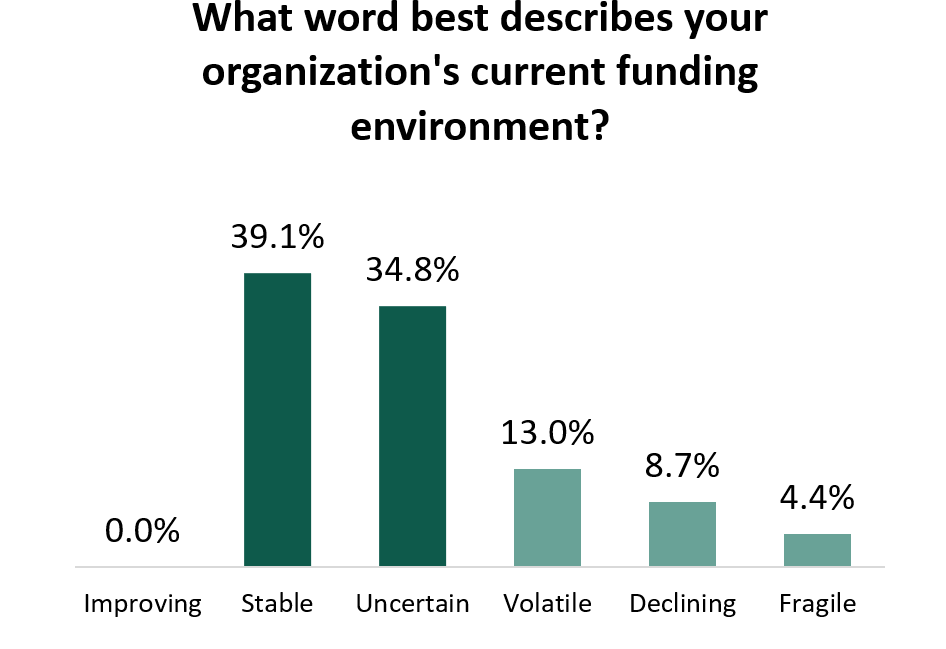
Within nonprofits, over 60 percent indicated that changes in government funding have impacted staff burnout and nine in ten said that ongoing uncertainty has made long-term planning more difficult.
No nonprofits described the current state of their funding environment as “improving.”
These results mirror what is being seen nationally. In a national assessment of the state of nonprofits, 73 percent of CEOs reported that their organization is experiencing an increase in demand for services. Staff burnout was also top of mind for leaders, with 46 percent indicated that burnout was “very much” a concern for themselves, and 96 percent felt that burnout was impacting their staff in some capacity.
The effects are becoming visible across the sector. Nearly half of respondents reported maintaining waitlists, while others reported service caps, enrollment freezes, or longer wait times for clients, all indicators of a system working to meet growing needs with finite resources.
When the public safety net fails, nonprofits are expected to…
Despite these challenges, the survey findings also point to a sector that continues to innovate. The fact that so many organizations are launching new services demonstrates a willingness to adapt, respond to emerging needs, and find new ways to support residents. Within the chaos, nonprofits are not standing still.
The survey also revealed how nonprofit leaders view their role in that process. When asked to complete the phrase, “When the public safety net fails, nonprofits are expected to…” respondents repeatedly returned to the same themes: fill the gaps, pick up the pieces, carry the burden, and do more with less. One respondent described organizations being expected to "pivot silently," while another questioned whether an adequate public safety net had ever fully existed, noting that nonprofits have long been filling unmet needs. The responses reflect a common reality across the sector.
As community needs evolve and public systems face challenges of their own, nonprofits are often expected to adapt quickly, expand support, and find solutions, even when funding, staffing, and organizational capacity are increasingly stretched.
For anyone who wants to better understand the human services sector, we encourage you to follow the Cuyahoga Human Services Chamber on LinkedIn.
What’s next?
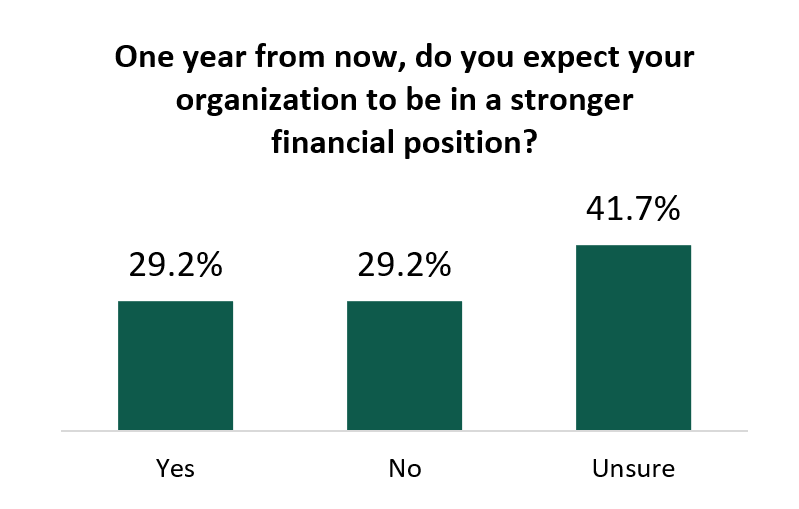
While nonprofits have demonstrated resilience and innovation, their ability to meet growing community needs depends on stable funding, a strong workforce, access to information, and opportunities to learn from and support one another.
In a time of significant uncertainty, collaboration is more important than ever. The Cuyahoga Human Services Chamber helps human services nonprofits connect to each other, share information, identify solutions, and amplify the collective voice of the sector. Through peer learning, mutual support, and coordinated action, we are stronger together. Human service nonprofits that are not yet members, we invite you to join us.
For anyone who wants to better understand the human services sector, we encourage you to follow the Cuyahoga Human Services Chamber on LinkedIn to learn more about the vital role human services nonprofits play in our region and the challenges they face in meeting growing needs.
The results from the Chamber survey suggest that nonprofits remain committed to meeting changing community needs. By working together, we can help ensure the sector has the resources, support, and visibility necessary to continue serving our community.