

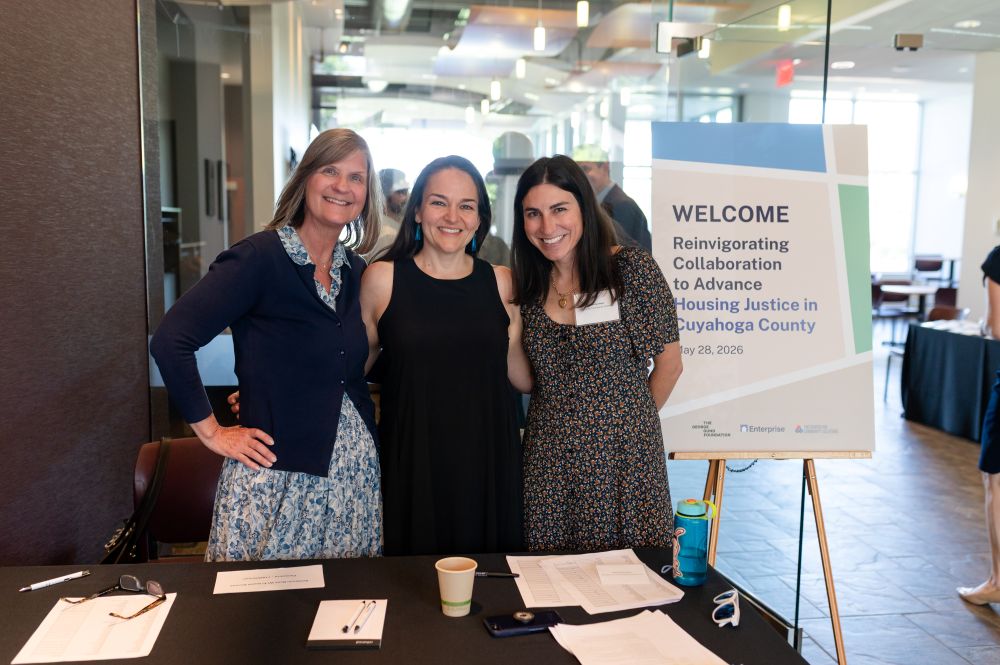
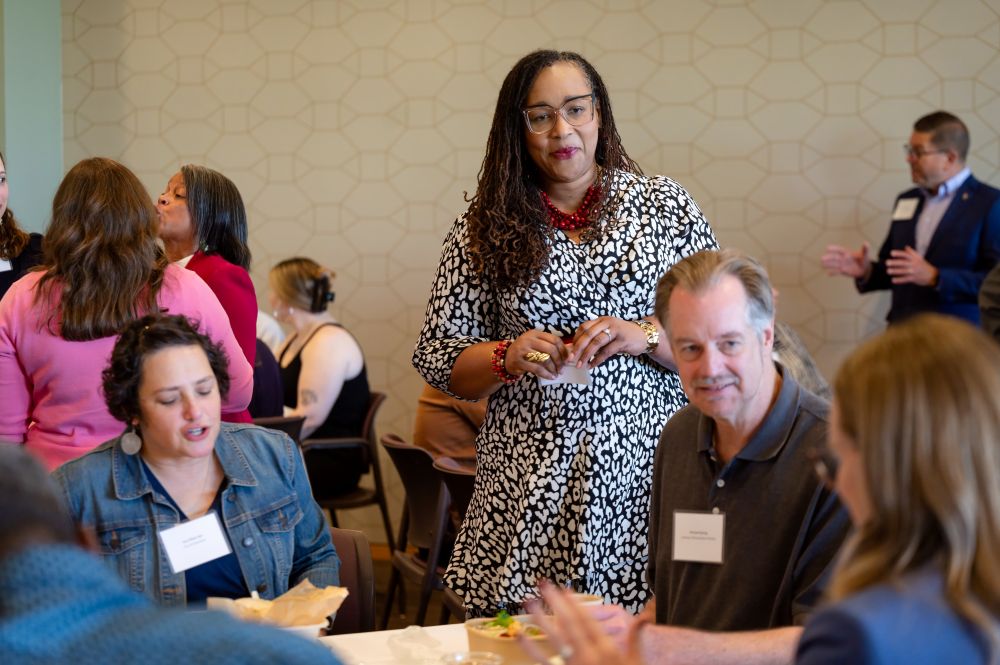
More than 140 community leaders, nonprofit providers, advocates, people with lived experience, and funders gathered in Cleveland for a conversation focused on building a better future to support housing justice. Sponsored by the George Gund Foundation, Enterprise Community Partners, and The Center for Community Solutions, the May 28 convening was intended as a springboard for ongoing collaboration, planning, learning, and advocacy. Goals for the gathering included:
- Inform the community about the shifting federal landscape as an opportunity to re-imagine and broaden community partnership to address local housing needs.
- Inspire multi-sector partners (workforce, family services, health care, education, senior services, etc.) to view their organizations as essential voices and contributors to housing justice work.
- Lay the ground work for a robust collaborative infrastructure to advance housing justice in Cuyahoga County through leadership, strategic communication, advocacy, and innovative approaches.
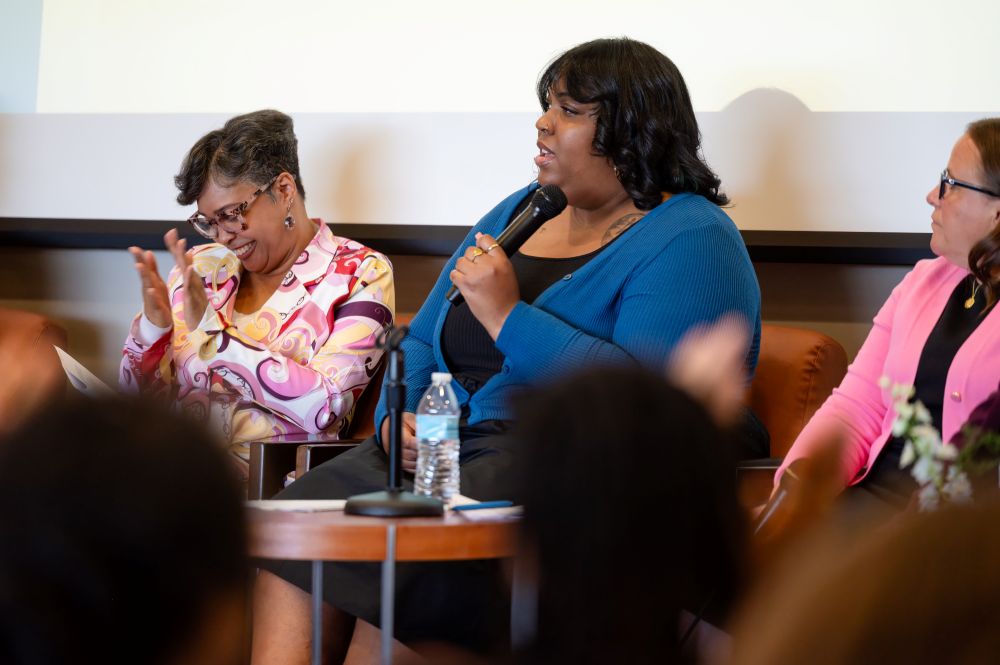
The panel discussion included perspectives from national, state, and local partners, each expressing encouragement that a new vision for housing justice is not only necessary, it is well within reach.
What is housing justice?
Opening the convening, President of the George Gund Foundation Tony Richardson welcomed attendees to the conversation. He noted the intentionality in the use of the term “housing justice,” and offered the following definition: the belief that safe, stable, and affordable housing is a basic human right and should be available to everyone. People, especially those who have been historically excluded from housing opportunity, should have agency and autonomy with respect to where and how they live. He stressed that housing justice must begin by acknowledging the history of oppression and racial injustice that systematically denied housing opportunity to people of color. The legacy of this injustice is alive and well today, as the overwhelming majority of individuals experiencing homelessness and housing instability in our community are people of color.
Housing justice, then, demands a systematic response. One that includes policy change, narrative work, alignment of resources, and advocacy for historically marginalized communities and people with the highest barriers to housing stability.
Building public will. Loudly.
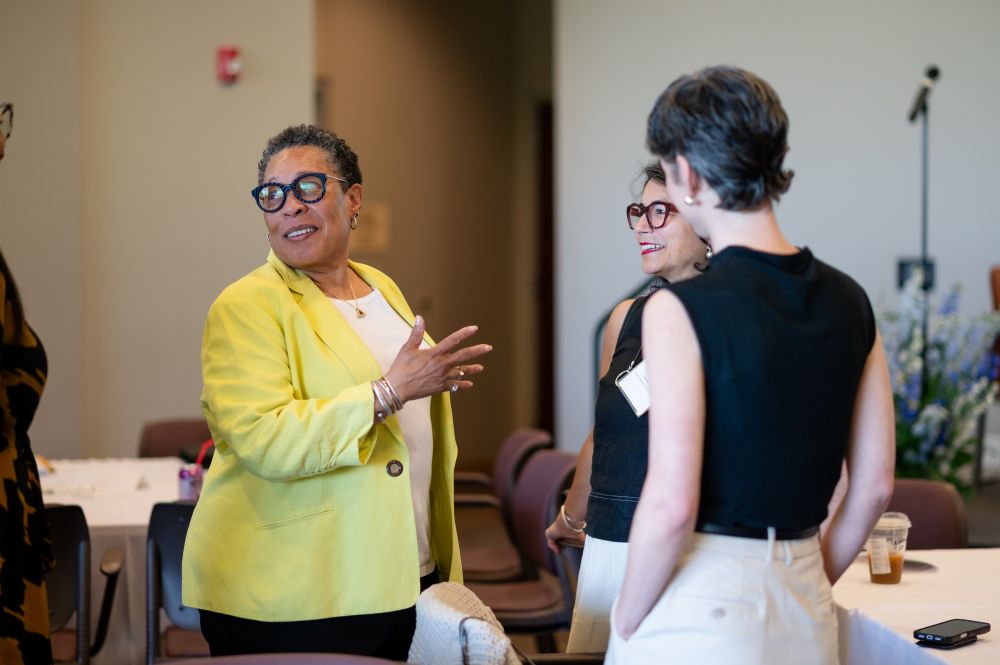
The 18th Secretary of the U.S. Department of Housing and Urban Development (HUD), the Honorable Marcia L. Fudge urged the community to be loud in its collective advocacy for housing justice. Housing is the foundation of an individual’s physical, emotional, and social wellbeing. Secretary Fudge shared a personal story during her tenure at HUD when she met a gentleman with a history of homelessness. He showed her a list of upcoming doctors’ appointments and shared details about his daily struggles in trying to improve his health while homeless. He then told her that he was finally able to receive housing where he not only felt safer being able to come home and lock his door to get a good night’s rest, but now had the ability to focus more intentionally on improving his health.
Secretary Fudge condemned federal divestment in housing supports and safety net programs like Medicaid and SNAP and the devasting impact it will have on vulnerable seniors, families, children, and individuals.
It is unconscionable that we live in the greatest nation in the world and we have hungry children and people sleeping on the street. It is a failure of policy.
She encouraged convening attendees to be loud in demanding answers and accountability from elected officials. The work to advance housing justice must start with public will building and a groundswell of advocates who will no longer tolerate the current state.
We have everything we need except the will to do it. We must find the will to do it.
The call to be Bold. Collaborative. Innovative.
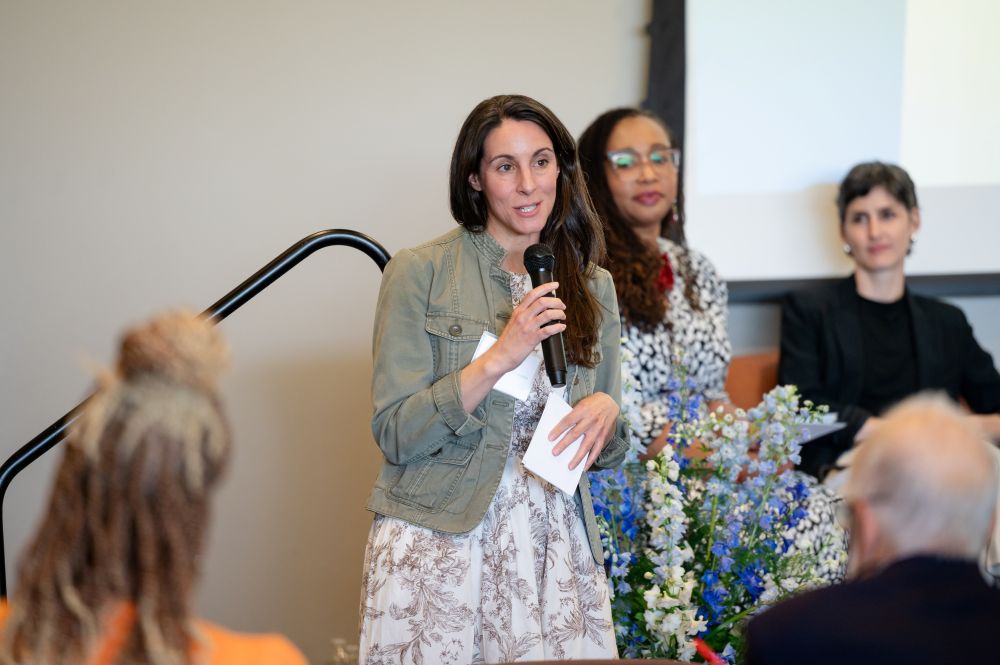
The panel discussion was moderated by Ayonna Blue Donald, vice president and Ohio market leader at Enterprise Community Partners. Panelists included:
- Lindsay Knotts, associate vice president, national policy, Enterprise Community Partners
- Kai Saga, executive director, The Metanoia Project and advocate
- LeVine Ross, director, Cuyahoga County Office of Homeless Services
- Amy Riegel, executive director, Coalition on Homelessness and Housing in Ohio
- Emily Campbell, president and CEO, The Center for Community Solutions
Sharing her perspective at the national level, Lindsay acknowledged the challenges of the current political environment as well as the opportunity for communities to get loud and strategic in response. The federal administration is decreasing resources and solutions that we have long known are necessary to support people experiencing homelessness and housing instability.
While challenging, this reality also presents opportunity.
Lindsay outlined a roadmap for meeting this moment with urgency and hopefulness:
- Re-imagine how the community can solve problems together, drawing on its collective strength and past proof points. Cuyahoga County has a history of coming together to address social problems. Lean into that experience.
- Be bold. Define together the future we hope to create, one that includes a range of housing and services to meet the variety of housing needs in the community.
- Invite as many stakeholders to the table as possible, not limiting collaboration with the usual partners. Create pathways and opportunities for unlikely champions to lend their voices to this work.
As director of the Cuyahoga County Office of Homeless Services (OHS), LeVine Ross is guiding the community through significant shifts in federal priorities and funding. OHS coordinates the community’s response to homelessness, delivered through a network of partners in the Continuum of Care (CoC).
LeVine shared that the CoC collectively serves 12,000 people experiencing homelessness in Cuyahoga County annually. This includes more than 1,400 families, 2,600 older adults and seniors, and 500 youth and young adults. She noted that family homelessness is growing, including families with income who simply cannot make ends meet.
While it remains to be determined, LeVine emphasized that the potential impact of changes in federal funding could result in the loss of 700 to 1,400 homes for individuals and families with histories of homelessness in Cuyahoga County. This is a community-wide impact that requires a community-wide solution. LeVine called upon the audience to act by supporting efforts to develop new housing solutions and advocating for Fair Housing legislation.
Community-wide impact requires a community-wide solution.
Kai Saga currently serves as the executive director of The Metanoia Project, which provides outreach and seasonal shelter to individuals experiencing unsheltered homelessness in Cuyahoga County.
As an advocate with lived expertise, Kai has walked alongside individuals and families experiencing housing injustice in our community for nearly a decade. She knows the power of collaboration and urged the community to break down silos, get to know other organizations, and try innovative solutions. "Housing justice is not just about housing," she said. "It is about financial literacy, childcare, meaningful employment, wellbeing. There is room in this work for everyone, and we need everyone."
It’s not just about partnerships. It’s about how we are being friends together. How we are holding hands and rising up together.
Rethinking collaboration
Amy Riegel, executive director of the Coalition on Homelessness and Housing in Ohio (COHHIO), offered perspective on the nationwide housing affordability crisis and how it undermines housing justice.
Nearly a quarter of extremely low-income renter households in Ohio are paying more than 50% of their income on housing. It is simply not sustainable. Amy shared that there are school districts in Ohio that are opening parking lots at night so that students and their families have a safe place to sleep. A crisis of this magnitude requires a bold, new approach to collaboration. Like Lindsay, Amy encouraged the audience to get outside their comfort zones and forge new partnerships, even with unlikely allies.
This not just elbowing up with those we normally do, but those we might not expect.
Amy shared her observation that there is increasing openness to new collaborations on housing, and a desire to set differences aside in pursuit of mutual goals.
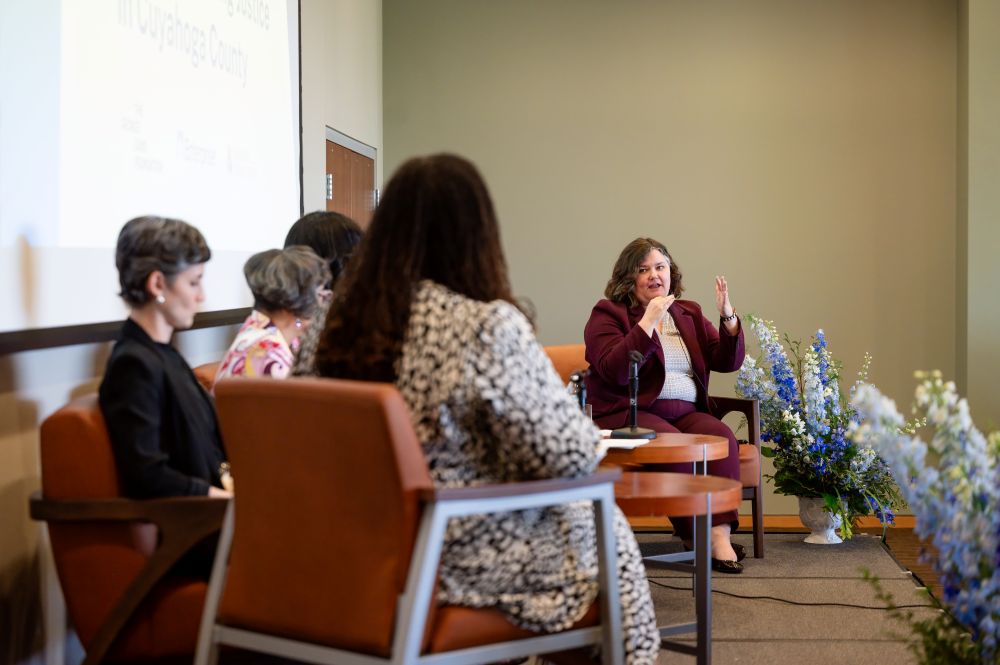
Emily Campbell echoed this perspective. As president and CEO of The Center for Community Solutions, she works across a variety of community issues and public programs. Emily noted that when there are plentiful resources and a positive policy environment, it’s easy for organizations to be territorial. But in the current climate, collaboration is a must, and she has seen old rivalries fall away in the face of a common, external threat.
Like other panelists, Emily noted the challenges but also the opportunities of this moment. While significant federal funding is at risk, that funding has always come with restrictions and barriers to effectively meeting the needs of individuals and families. When that funding falls away, so do those restrictions, creating new opportunities to develop and deliver innovative approaches to service. Emily encouraged audience members to think about what they and their organizations can bring into new partnerships in service of individuals and families in need.
Throughout the panel conversation, the audience was invited to submit questions and lend their voices to the discussion.
Audience members submitted more than 20 questions, and while the panel wasn’t able to address them all, it spoke to the energy and engagement palpable in the room. Questions addressed a range of topics including advocacy tips for talking to elected officials and supporting housing justice legislation, the role of philanthropy and the business community in housing justice work, and how organizations can be bold even in the face of risk or retribution for speaking out. The conversation ended with each panelist reflecting on what gives them hope and endurance for the long journey toward housing justice.
What’s next for housing justice in Cuyahoga County?
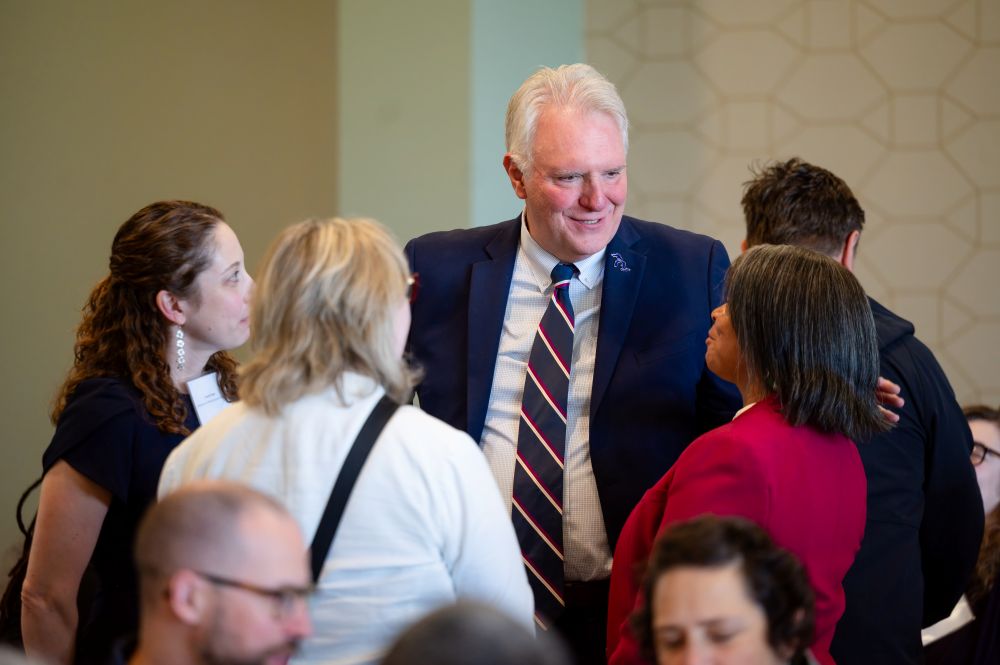
Tony brought the convening to a conclusion, thanking the panelists and audience for their engaged participation. He shared that The George Gund Foundation is committed to working with partners to develop collaborative infrastructure to address housing justice in Cuyahoga County, and that today’s gathering was a commencement of this effort.
Tony encouraged the audience that the solutions to housing instability and homelessness are likely found among the stakeholders, advocates, and leaders in the room. The work ahead is to build intentional opportunities for the community to work together in new ways to reveal solutions and to weather whatever changes may come our way.



.png)