Our work is hard to do right now.
Not because it suddenly matters less, but because it matters so much in the middle of everything else. The systems we study feel more fragile. Trust in institutions has diminished. The consequences of getting things wrong feel greater, even as the room to get things right narrows. The whiplash is relentless. It’s become harder to write, harder to focus, harder to believe that another report, another dataset, another recommendation will land anywhere solid.
Sometimes, though, the very skillset that drives our often-difficult work offers a respite from it.
Literacy feeds educational, economic, and personal growth
Literacy is a place where effort reliably turns into access. Traditionally, literacy was viewed as the ability to read and write. Understanding and interpreting all kinds of nuanced and complex communications have become essential skills. Literacy extends beyond traditional reading and writing to include digital, financial, and health literacy, among many others, each requiring the capacity to comprehend and navigate their own systems.
Literacy extends beyond traditional reading and writing.
Literacy enables individuals to make informed decisions and enhances their capacity for personal growth. It contributes to improved educational outcomes, workforce skills, health awareness, and active engagement within communities.
One early childhood reading program gets adults reading more, too
Shared reading in childhood is one of the best ways to promote early literacy, and my household is grateful to participate in the Dolly Parton’s Imagination Library program. Every month, my kids each get a book from “Miss Dolly,” and I am afforded at least 10 minutes of peace as they page through their new books. Our bookshelves are visibly sagging under the weight of the Imagination Library books we’ve accumulated over the years, which feels like a very good problem to have.
One of Community Solutions’ longtime partners, The Literacy Cooperative, is an organization that makes that magic happen locally. They serve as the Cuyahoga County hub for Dolly Parton’s Imagination Library and are dedicated to building and sustaining literacy programs across the region. Community Solutions has a longstanding relationship with The Literacy Cooperative, most recently to develop the 2025 Dolly Parton’s Imagination Library Participant Survey Report.
63% of caregivers said they themselves are reading more, too.
Each year, thousands of families participating in the Imagination Library through The Literacy Cooperative are surveyed about their experience, and the findings are consistently powerful. The 2025 report found that nine out of ten families reported that their children ask them to read together more since receiving books. And 63 percent of caregivers said they themselves are reading more, too.
Reading to connect and reflect
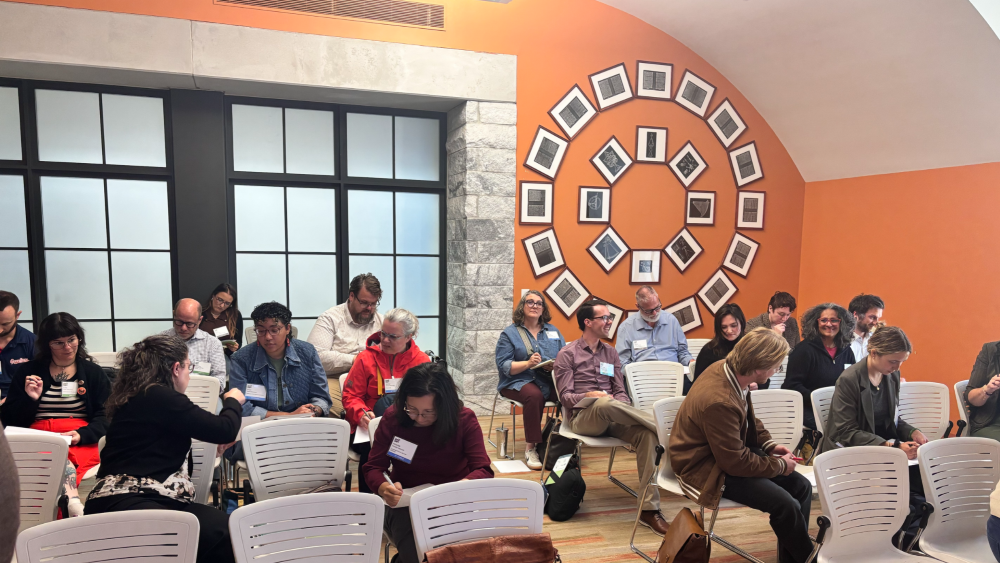
Last summer, the Cleveland office of Community Solutions started a voluntary book club for anyone who wanted to participate. Born from a desire to connect as individuals outside the office and to discuss books over happy hour, it has become a real community of colleagues. Each colleague has a chance to pick the next book, choose a local dinner spot, and curate the discussion.
Much like one of the goals of the Imagination Library, our book club gives us a chance to explore books that we may not have picked on our own, broadening our perspectives and diversifying our bookshelves. We read to escape the heaviness of the world, and honestly, the heaviness of the work. It’s a brief, necessary break from drowning in reports, policy briefs, and combating feelings of burnout.
This is why literacy matters even when everything else feels broken. Because reading is a necessary tool to try to understand and challenge systems. It’s what turns information into action, services into access, and participation into something real. It enables individuals to more effectively interact with systems while also offering pathways for disengagement when necessary.
Literacy skills directly affect health and economic outcomes
Those with poor literacy skills are twice as likely to be unemployed and are more likely to experience poor health outcomes. Books play a significant role in the development of literacy skills. But so do tutors, libraries, family literacy programs, early childhood interventions through the often unrecognized work of helping people read and understand what they need to survive and thrive.
And research continues to point back to supporting our youngest readers through access to books, through programs like the Imagination Library, and support that local organizations provide, like The Literacy Cooperative.
Literacy also opens the door to a meaningful kind of self‑care, one that isn’t indulgent, but sustaining. Historically, self‑care wasn’t viewed as a luxury but as a technique for self‑empowerment to continue to fight social injustices.
In a moment defined by instability, literacy (through the power of reading) is one of the few investments that consistently gives people more room to breathe, myself included. It’s crucial for moving through the systems of life. And, frankly, it’s become essential for my sanity.